
All-in-One Games
NAJOX PlayTrivia
4.618.00 Reviews
- Version
- 8.0
- Installs
- 50.00K
- Age Rating
- Everyone 10+
Screenshots
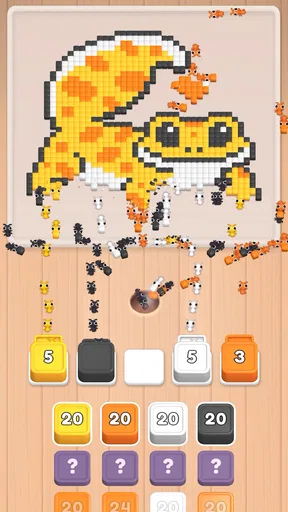
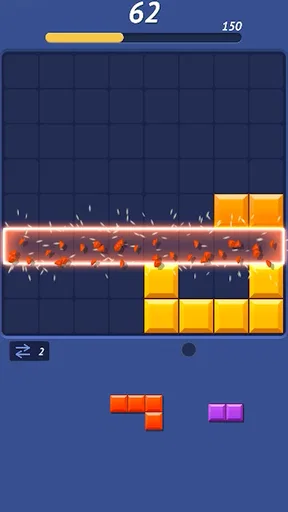

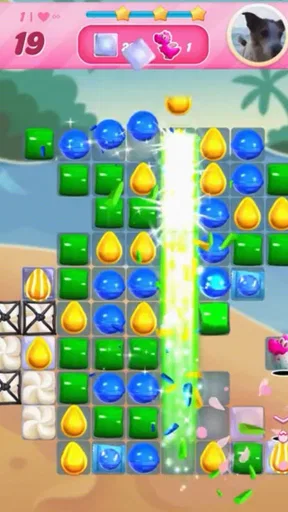
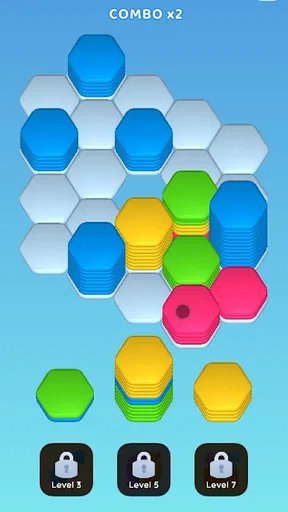

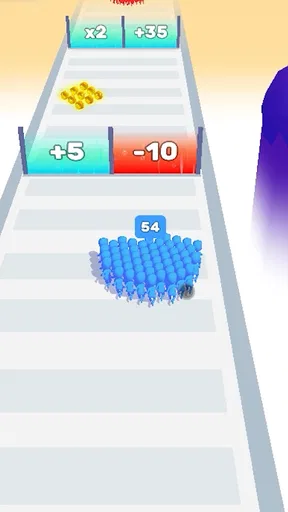

Our Review of All-in-One Games
 Analysis by Appyee
I spent time with All-in-One Games as a quick-play trivia collection from NAJOX Play, and my first impression was simple: it is built for people who want to start playing immediately rather than commit to one large game. The idea is appealing when I have a few spare minutes, because the format keeps the barrier low and lets me move from one small challenge to another without treating the session like a major project.
That convenience also defines the experience. This is not the kind of trivia game I would choose when I want a deep campaign, a carefully developed story, or a single subject explored in detail. I see it more as a flexible pocket activity: useful during a short break, suitable for casual competition with friends, and easy to return to when I want something lighter than a full game. The important question is whether the collection can make those brief sessions feel purposeful instead of disposable.
How the game turns short sessions into a routine
The early goal is immediately understandable: choose a game, answer questions, and see how well I can do. That clarity is one of the strongest parts of the design. I do not need to learn a complicated control scheme before reaching the first meaningful decision, and the trivia focus makes the challenge readable even when I am playing for only a few minutes.
For a new player, that creates a gentle entry point. I can begin with curiosity rather than preparation, test my general knowledge, and decide naturally whether I want another round. The all-in-one format is especially useful here because it gives the opening session some variety. Instead of asking me to repeat one identical activity until I am invested, it encourages experimentation across the available games.
That variety is also where the title’s main appeal becomes more specific. I would recommend it to someone who regularly gets interrupted while playing. A short wait, a coffee break, or the final few minutes before bed can become a complete session rather than an awkward pause in a longer adventure. I found that easier to appreciate than a traditional trivia app that expects me to follow a fixed daily rhythm or build a large collection of content before the experience becomes interesting.
Still, the low commitment can work against long-term motivation. A clear first objective is not automatically a strong long-term objective. If I am looking for a campaign with a visible destination, character development, or a sequence of major milestones, this collection may feel too open-ended. Its early goals are practical and immediate, not dramatic. That is a good match for casual play, but less convincing for anyone who needs a strong sense of journey.
What progress feels like when the format stays lightweight
Progress in a trivia game does not have to mean a large map or a long list of upgrades. Here, the most natural progress signal is my own improvement: recognizing question patterns, reducing hesitation, and learning which subjects expose gaps in my knowledge. That makes each return potentially useful, even when the game does not feel like a traditional progression-heavy title.
I like this kind of progress because it remains personal. A result that looks ordinary to another player can still matter if I answered more confidently than before. It also makes the game suitable for mixed groups. A knowledgeable player can chase better performance, while a less experienced player can focus on understanding mistakes and gradually becoming faster.
There is a practical tip I would give new players: do not judge the whole experience from one rushed session. Treat the first few rounds as a way to identify your weak areas and your preferred pace. If you immediately focus only on winning, a difficult question can make the game feel harsher than it really is. If you instead use the variety to discover what keeps your attention, the collection becomes easier to evaluate on its own terms.
The progress signals are therefore subtle. They are not necessarily the kind of rewards that keep a player engaged through a long evening. They work better as feedback: a reminder that I am remembering more, making fewer careless choices, or staying composed when the questions become less familiar. Players who enjoy self-improvement will notice that value sooner than players who expect a large unlock structure.
That distinction matters when comparing this with the usual alternatives in the trivia category. A dedicated quiz app may offer a more focused subject library or a clearer competitive ladder. A broad casual-game hub may provide more mechanical variety but less emphasis on knowledge. All-in-One Games sits between those approaches. It favors immediate access and a mixed selection over deep specialization, which is convenient but means it may not satisfy a player searching for one expertly focused trivia format.
Challenge and pacing: enough pressure without turning every round into work
The pacing is best understood as flexible rather than forceful. Because the game is designed around quick access, I can decide how much attention to give it. I might answer casually while waiting somewhere, or concentrate more seriously when I want to test myself. That adaptability is a real strength, especially on a phone where the length and quality of a session can change from one moment to the next.
At the same time, flexible pacing can make the challenge feel uneven from a personal point of view. Trivia is naturally dependent on subject familiarity, so a round can feel comfortable one moment and suddenly demanding the next. I do not see that as a flaw by itself; unpredictability is part of the appeal. But players should know that the difficulty may be experienced less as a smooth climb and more as a series of individual tests.
My advice is to use the game’s variety as a way to manage that curve. When a subject feels frustrating, switching to another activity can preserve the session instead of turning one weak area into a reason to quit. Then I can return later with a clearer head. This is one of the less obvious benefits of an all-in-one design: it gives the player a way to adjust the emotional temperature without leaving the app entirely.
That approach will not suit everyone. Some players want difficulty to rise in a carefully measured sequence, with each stage teaching a skill before introducing a harder one. If that structure is essential, a specialized trivia game may be the better choice. All-in-One Games is more comfortable as a collection of accessible challenges than as a formal training program.
The age guidance also helps define the intended atmosphere. With an Everyone 10+ rating, I see it as appropriate for a broad audience while still being aimed beyond very young children. That makes it a reasonable option for family-friendly casual play, but adults should not assume that every question will match their interests or knowledge level. The appeal comes from sharing a lightweight challenge, not from guaranteeing that every round will be equally engaging for every person.
Does it create healthy reasons to keep coming back?
Retention is where my opinion becomes more balanced. The app’s strongest reason to return is convenience. It is free, it starts quickly, and the collection format reduces the chance that I will run out of things to try immediately. The store summary presents that same basic promise in a compact way: play without dealing with a conventional installation process for each individual game. In practice, that makes the experience feel more like opening a small entertainment shelf than launching one fixed title.
However, convenience is not the same as lasting motivation. I would keep coming back when I wanted a short mental break, when I was in the mood to compare my performance with a previous attempt, or when I wanted to show the game to someone nearby. I would be less likely to build my entire gaming routine around it. Without a strong personal target, the sessions can become interchangeable, and that is the main retention limitation I noticed.
The best way to avoid that is to create a small goal before playing. I might decide to complete a focused session without guessing too quickly, improve my accuracy in a subject that usually causes trouble, or use the game as a social warm-up before a longer conversation. These goals are not presented as a grand progression system; they are player-made reasons to pay attention. That makes the experience more rewarding, but it also means the user has to supply some of the structure.
Another useful workflow is to treat the app as a reset between demanding tasks. After working or studying, I can play for a short period without committing to a story or remembering a complicated control layout. The trivia format gives my attention something concrete to do, while the limited scope makes it easier to stop. For me, that is more valuable than chasing endless sessions, because the game works best when it refreshes a moment rather than consuming an entire evening.
The trade-off is clear: players who enjoy self-directed, bite-sized entertainment will probably appreciate the freedom, while players who need constant rewards, competitive ranking, or a detailed unlock path may lose interest. I would not call that a defect in the concept, but it is an important expectation to set before downloading. The game’s retention comes from accessibility and variety, not from a heavy pressure loop.
Practical fit, device expectations, and who should choose it
All-in-One Games is free, which makes it easy to try without turning the decision into a financial commitment. It runs on Android 6.0 or later, so compatibility covers a wide range of devices, including phones that are not recent. That matters for a casual title: I would rather use a game like this on an older spare phone than reserve my newest device for a few-minute trivia session.
The current version is 8.0, and the game was released on August 25, 2025. Those details place it as a relatively recent option for someone browsing the trivia section, while the install base of over 50 thousand shows that it has already reached a meaningful group of players. Its average rating of 4.6 from around 174 ratings is encouraging, although I would still treat that as a helpful signal rather than proof that every player will want the same experience.
I also think the number of ratings makes personal expectations important. A highly positive average can indicate that the core idea is working for its audience, but it cannot tell me whether the question mix, pacing, or lightweight structure matches my own habits. Before installing, I would ask myself whether I want quick variety or a deep, specialized quiz environment. That single choice predicts satisfaction better than the rating alone.
For everyday use, I can imagine recommending it to a friend who wants something to play while waiting for an appointment, to a family looking for a simple shared activity, or to a trivia fan who enjoys sampling different challenges rather than repeating one format. I would also suggest it to someone with an older compatible Android phone who wants a free option that does not demand a major time investment.
I would skip it if my priority were a serious knowledge-training tool, a long-form competitive ladder, or a story-driven game with carefully staged unlocks. I would also look elsewhere if I wanted deep customization or a single subject explored with expert-level detail. A specialized alternative is likely to serve those needs more directly, even if it gives up the convenience of having several casual options together.
My verdict on goals, challenge, and staying power
After looking at the whole loop, I think the game succeeds when I judge it as a portable collection of quick trivia activities rather than as a full progression adventure. Its early goals are clear, its challenge is easy to approach, and its variety gives me a practical way to keep a difficult round from ending the session. The strongest progress comes from improving my own recall and decision-making, not from expecting a large chain of unlocks.
That also explains the main weakness. The game does not need to be complicated, but players who want a powerful long-term hook may find the pacing too loose. I sometimes wanted a more obvious reason to continue beyond curiosity and self-improvement. When that feeling appears, the app is better used in short bursts, with a personal target chosen before the round, rather than treated like a primary game that must hold my attention for hours.
My final recommendation is positive but specific. Try it if you want a free trivia game that opens the door to quick, varied sessions and does not ask you to make a large commitment. Keep your expectations realistic about progression, and use the collection’s variety strategically when one type of challenge becomes tiring. Its real strength is making a small amount of spare time feel playable, while its real limitation is that the player may need to create the long-term purpose.
For me, that is enough to recommend it to casual players, families, and anyone who likes testing general knowledge in short intervals. I would not present it as a replacement for a dedicated quiz platform or a deeper game with a structured campaign. As a lightweight trivia option from NAJOX Play, though, it has a clear place: accessible, easy to sample, and most enjoyable when I let each session stay as short or as focused as the moment requires.
Verdict
Strengths of All-in-One Games
- Includes multiple game genres in one convenient app
- Quick access to casual games without installing each title
- Suitable for short gaming sessions and casual players
- Simple interface makes browsing games easy
- Offers variety for different ages and preferences
Limitations of All-in-One Games
- Game quality may vary significantly between included titles
- Frequent ads can interrupt gameplay and navigation
- Some games may require an internet connection
- Limited depth compared with dedicated standalone games
- App size and data use may increase with added content
Similar Picks in This Category
View All
Millionaire 2026 Quiz & Trivia
Quiz & Trivia Games by Submarine Apps4.5

Brain Test 2: Tricky Stories
Unico Studio4.7

Trivia Crack: Brain Quiz Games
etermax4.4

QuizzLand. Quiz & Trivia game
Quiz & Trivia Games by Mno Go Apps4.8

Brain Test: Tricky Puzzles
Unico Studio4.7

Logo Quiz
bubble quiz games4.5
Frequently Asked Questions
What is All-in-One Games?
All-in-One Games is a mobile gaming application that brings several casual and entertaining game experiences together in one place. Instead of downloading each title separately, users can browse the available collection from a single app. The selection may include puzzle, arcade, action, sports, or other lightweight games, depending on the version and platform. It is designed for quick entertainment and easy access.
Is All-in-One Games free to download and play?
The application can generally be downloaded without an upfront purchase, but some games or features may include advertisements, optional in-app purchases, or other monetization methods. Before installing, users should check the store listing for the current pricing information and supported payment options. Availability of premium content can vary by region, device, operating system, and app version.
Does All-in-One Games require an internet connection?
The connection requirements depend on the individual games included in the application. Some titles may work offline after installation, while others can require an internet connection for loading content, advertisements, updates, leaderboards, or multiplayer functions. During testing, users should open each game and check its behavior without Wi-Fi or mobile data instead of assuming that the entire collection is fully playable offline.
Is All-in-One Games suitable for children?
All-in-One Games may be suitable for children when the included titles have age-appropriate content, but parents should review the official age rating and the games available inside the app. Advertisements, external links, chat features, or in-app purchases may also be present. For younger users, parental controls and purchase restrictions are recommended, particularly when the app is installed on a shared family device.
What devices support All-in-One Games, and is it safe to install?
Compatibility depends on the specific release, so users should confirm the required Android or iOS version, available storage, and device limitations on the official app store page. For safer installation, download the application only from Google Play or the Apple App Store rather than unofficial websites. It is also sensible to review requested permissions, developer information, privacy details, and recent user feedback before installing.
Play our best games!


